
SESSION TWO: ORGANIZATIONS TODAY
Organizations do not remain static. They evolve in response to changing markets, demanding customers, and advancing technology. Whether you see someone who enjoys change or resists it, you’re feeling the effects.
In this session, you’ll get a quick overview of organizations today, and consider the impact of the shifts that have taken place on teams.
A Changing Structure
The traditional organizational hierarchy looks like this:
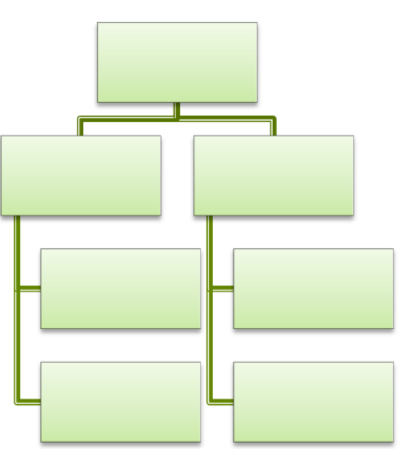
However, many companies continue to keep their organizational structure as flat as possible, allowing them some flexibility, easy access to decision makers, and a lean system of operating. Many organizations also choose a more web-like structure than typical hierarchies of the past. With the web structure, instead of simply reporting to people above, we can also report to multiple people through lateral connections.
Things have certainly changed in many places, and things are still changing, especially when we look at organizations that are based on the overlapping, interactive work of teams. The change from hierarchical to more of a fishnet organization demonstrates the partnerships, teams, and interpersonal relationships that make our companies thrive.
Many of us are already working in business teams, project units, and other ad hoc committees. Can you think of some of these alliances within your organization?
Trends in Business
Many businesses have shifted attention from their competition to their customers. They understand that it is easier to work with existing customers than to find new ones, so customer service is a key operational area. There is still plenty of interest on the competition, but the focus has shifted.
Working from home and setting up virtual networks are not replacing the office environment, but they are certainly having a large impact in some places. The use of mobile devices assists these efforts, as we become more and more reliant on virtual capabilities.
An orientation toward continual learning has replaced one-time training for many employees. Learning must be life-long for everyone.