
SESSION SEVEN: SWOTTING UP
Solving business problems can be a bit different than everyday dilemmas.
In this session, you will learn how to use SWOT (Strengths, Weaknesses, Opportunities, Threats) analysis in your organization.
SWOT Analysis
Solving business problems can be a bit different from solving everyday dilemmas. One suitable problem-solving method is to use the SWOT analysis, where the members of your team attempt to identify the assets and liabilities of the organization as they look to the future.
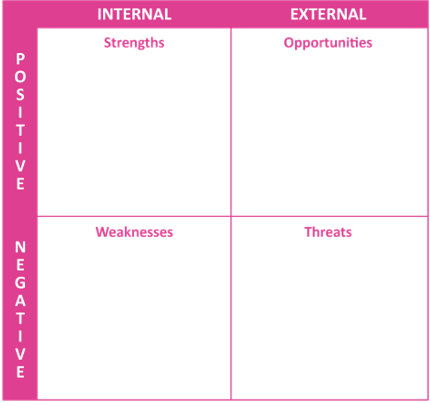
SWOT stands for the strengths, weaknesses, opportunities, and threats facing your company. The strengths and weaknesses are usually considered to be internal, while the opportunities and threats are generally external to the company. This analysis helps you ask yourself, “Where are you now?” This is really your situation analysis or inventory, and it gives you an opportunity to take stock of the overall situation right now before planning any future changes.
SWOT Matrix
You can use this matrix to help you lay out your analysis:
SWOT Checklist
A SWOT analysis should consider:
- Your company and its strengths and its weaknesses
- Your products and/or services and their strengths and weaknesses
- The community and what is currently going on that may affect future planning
- Your primary and secondary target markets and what they want/need
- The competition and what they are doing
- The external forces that will affect your business
- Opportunities that are available to you and your company
- Environment and market factors that could threaten your business