
SESSION THREE: FUNDAMENTAL ELEMENTS
One of the most effective bosses I have ever worked for had an uncanny knack for turning an average conversation into something powerful because he could ask such good questions. He never operated at a superficial level; all his questions made me think.
In this session, you’ll learn techniques that can help lead to meaningful conversations. You’ll also work on building your listening skills.
Designing Meaningful Conversations
Conversation between two people seems to be the easiest way to share information, but good conversations take a little more effort than you might be accustomed to in order to get results.
Meaningful conversation involves deeply reflective listening, suspending assumptions, and building shared meaning through an exchange, as opposed to an argument. Meaningful conversation also involves speaking when you feel moved to participate, rather than being required to speak as part of a social norm or an expectation.
Conversation does not include discussion, debate, persuasion, convincing, or tactics to try to change someone’s opinion.
In organizations today, we often refer to terms like key messages and wordsmithing. We often communicate through Power Point presentations, e-mail, and text messaging. However, a conversation brings us back to the practice of sharing, thinking, and creativity by communicating stories and connecting ideas together.
If you’ve heard of dialogue tools like these, they exist to help people to communicate better:
- Meeting audits
- Facilitated conference calls
- Storytelling for corporate leaders
- Accountability agreements
- Interest-based negotiations
When we create opportunities for particular kinds of communication to take place, we have an opportunity to design conversations that lead to shared meaning, deeply respectful dialogue, and effective listening.
Building Your Personal Skills
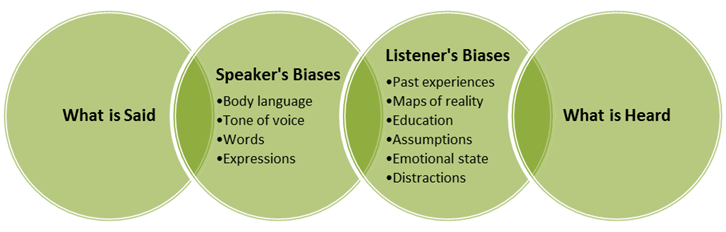
What we say isn’t always what the other person hears. Our message goes through a complicated system of filters and outside influences before it reaches the recipient. We must always clarify that the person has received the message that we intended to send.
Tips for Becoming a Better Listener
Since listening is such an important part of a conversation, let’s review some tips for being a better listener.
- Make a decision to listen. Close your mind to clutter and noise and look at the person speaking with you. Give them your undivided attention.
- Don’t interrupt Make it a habit to let them finish what they are saying. Respect that they have thoughts they are processing and speaking about, and wait to ask questions or make comments until they have finished.
- Keep your eyes focused on the speaker and your ears tuned to their voice. Don’t let your eyes wander around the room, just in case your attention does too.
- Carry a notebook or start a conversation file on your computer. Write down all the discussions that you have in a day. Capture the subject, who spoke more (were you listening or doing a lot of the talking?), what you learned in the discussion, as well as the who, what, when, where, why, and how aspects of it. Once you have conducted this exercise 8-10 times, you will be able to see what level your listening skills are currently at.
- Ask a few questions throughout the conversation. When you ask, people will know that you are listening to them, and that you are interested in what they have to say. Your ability to summarize and paraphrase will also demonstrate that you heard them.
- When you demonstrate good listening skills, they tend to be infectious. If you want people to communicate well, you have to set a high example.