
SESSION SEVEN: CREATING EXPLANATIONS
The way we present what we know, and what we think about, has a significant impact on what people think about what we are saying. Having a way to clearly present yourself can help you express your ideas.
In this session, you will learn about explanations, arguments, and the explanation building process.
Defining Explanations
Explanations and Arguments
Another important part of critical thinking is being able to clearly explain why something is a particular way. Instead of trying to persuade someone to a particular point of view, explanations allow you to understand why something happened. Or, you may use the explanation framework to evaluate an argument. Explanations focus on causes, where arguments focus on evidence.
Arguments can be identified by the presence of evidence, such as hard facts or specific events. Explanations can be identified if they appear as an answer to a question. They often appear in the form of opinions, with phrases like “I think,” or, “My guess is…” or, “In my view.” Explanations can, however, be an excellent starting point for arguments.
Steps to Building an Explanation
There is a four-step cycle that you can use to build an explanation.
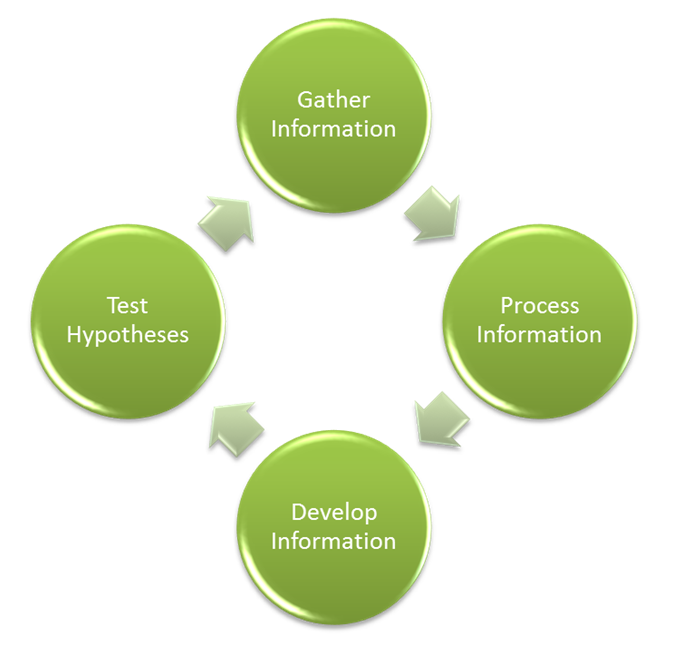
Gathering Information
To start, gather as much information as possible from as many different sources as possible. Be open-minded and make sure not to discard anything right away.
Processing Information
Once information is gathered, it must be processed. This means categorizing the information, assessing its reliability and credibility, and comparing and contrasting similar pieces of information. Your goal is to make sense of what is in front of you.
Developing Hypotheses
Now it’s time to synthesize the information that you have gathered and process it into some possible explanations. Typically, three to five tentative hypotheses is a good number to aim for: not too few to restrict yourself, but not too many to overwhelm you.
If you’re having trouble developing hypotheses, try asking yourself these questions:
- How might someone else explain this?
- Step back from the data and look at the big picture. What does it tell you?
We’ll look at some more ways to generate ideas a little later in this course.
Testing Hypotheses
Finally, it’s time to test and evaluate your hypotheses. Ask yourself:
- Does this hypothesis account for all the evidence?
- Does the hypothesis make sense? Is it believable?
- Why is it better than the other alternatives?
Based on the results, you may need to return to a previous phase in the cycle.