SESSION THREE: EMOTIONAL INTELLIGENCE DEFINED
If you have the opportunity, we recommend that you explore different research about emotional intelligence in order to further your understanding. This course presents several researchers who have done some fascinating work. Complete texts are available in the Recommended Reading List.
In this session, you’ll learn some definitions related to emotional intelligence and meet some of the primary experts in the field.
Definitions and Thoughts
Defining Emotional Intelligence
Emotional intelligence is our ability to:
- Accurately identify emotions in ourselves and others
- Understand and manage emotions
- Use and effectively communicate emotional feelings
To help us understand these concepts, let’s look at some thoughts from the experts.
Reuven Bar-On, Ph.D.
“Emotional intelligence is an array of personal, emotional, and social competencies and skills that influence one’s ability to succeed in coping with environmental demands and pressures.”
John Mayer, Ph.D. and Peter Salovey, Ph.D.
“[Emotional intelligence is] the ability to perceive, appraise, and express emotion accurately and adaptively; the ability to understand emotion and emotional knowledge; the ability to access and/or generate feelings when they facilitate thought (use); and the ability to regulate emotions in ways that assist thought (manage).”
Mayer and Salovey also developed the PUUM Model:
- Perceive
- Use
- Understand
- Manage
Daniel Goleman
“Emotional intelligence is the capacity not only to be aware of and able to express our emotions but to manage and moderate them effectively too. Emotional intelligence is what prevents anger from turning into rage and sadness into despair.”
The Six Seconds Model
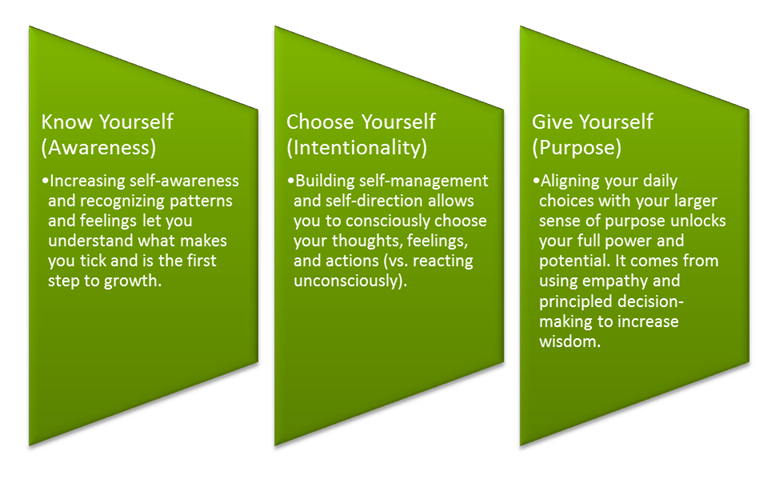
Another way of thinking about emotional intelligence is the Six Seconds model: